
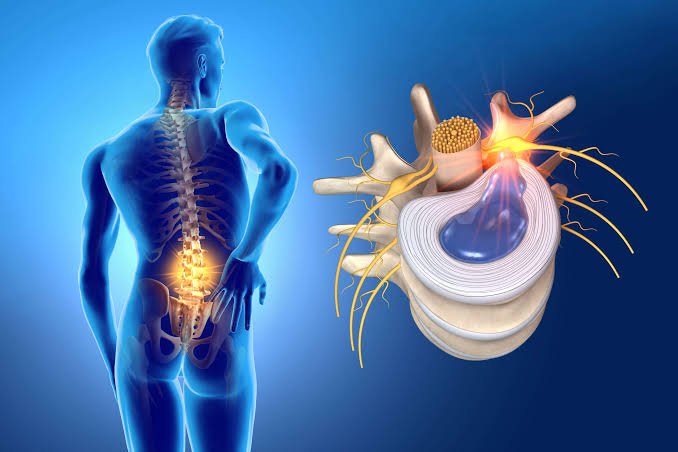
The intervertebral disc is one of the most mechanically demanding structures in the human body. It must simultaneously function as a cushion absorbing compressive loads, a flexible spacer maintaining distance between vertebrae, a pivot allowing multidirectional movement, and a structure stable enough to protect the delicate neural tissue running through and beside the spine. It performs all of these roles continuously, across decades, without direct blood supply once adulthood is reached.
Understanding what happens structurally when a disc begins to fail explains a great deal about why back pain develops the way it does, why it persists even when a person appears to be resting adequately, and why specific non-surgical treatments produce the kinds of results that passive care cannot replicate.
The Disc’s Remarkable Design
Each intervertebral disc consists of two distinct structural zones. The annulus fibrosus is the outer ring, built from concentric layers of fibrocartilage arranged in alternating oblique angles, much like the layering in a radial car tyre. This architecture allows it to resist tension from multiple directions simultaneously. Inside sits the nucleus pulposus: a gel-like core with a high water content that distributes compressive forces hydrostatically, spreading load evenly across the disc surface rather than concentrating it at any single point.
This two-part design is elegant and effective, but it depends critically on the disc’s hydration. The nucleus draws water in during periods of reduced loading, and releases it under compression. This fluid exchange, driven by osmotic pressure and mechanical loading cycles, is also the primary mechanism by which the disc receives nutrients and expels metabolic waste. A disc that moves regularly and loads appropriately stays nourished. One that is chronically compressed or chronically immobile cannot maintain this exchange effectively.
How Degeneration Begins and Progresses
Disc degeneration typically begins with a reduction in the nucleus’s capacity to hold water. The proteoglycan molecules responsible for the nucleus’s water-binding properties diminish with age and certain lifestyle stressors. As the nucleus becomes less hydrated, disc height decreases, and its ability to distribute load evenly is compromised.
The annulus begins to experience uneven stress as a result. The layers of fibrocartilage, now subject to asymmetric loading over extended periods, develop micro-tears and fissures. These fissures can propagate toward the outer edge of the annulus, eventually creating pathways through which nuclear material can migrate. When nuclear material reaches the outer third of the annulus, which is the only zone with nerve supply, it produces pain. When it exits the disc entirely and contacts nerve tissue, it creates the more intense and often neurological symptoms associated with disc herniation.
Why the Disc Cannot Simply Heal Itself
Unlike most body tissues, adult intervertebral discs have no direct blood supply. They rely entirely on diffusion and the fluid exchange described above for nutrient delivery. This makes them uniquely vulnerable to conditions that impair their fluid dynamics, including sustained compression, dehydration, poor posture, and sedentary habits, and uniquely slow to heal when damaged.
The body does attempt repair through fibrocartilaginous scar tissue formation in damaged annular regions. But scar tissue lacks the architectural strength of the original fibrocartilage, leaving repaired areas more vulnerable to re-injury. This is why degenerative disc conditions tend to progress over time without intervention and why simply waiting for the body to fix the problem independently is rarely an effective strategy.
What Spinal Decompression Does at the Disc Level
Non-surgical spinal decompression treatment works by creating a controlled, intermittent reduction in the pressure within the disc. By applying computer-guided decompression forces to the specific affected spinal level, the technique reverses the compressive loading that impairs the disc’s fluid exchange. Clinics such as ANSSI Wellness use this approach as a cornerstone of herniated disc and degenerative disc care, precisely because it addresses the disc’s internal environment rather than simply managing the resulting symptoms.
The reduction in intradiscal pressure during decompression sessions creates conditions that encourage nuclear material to retract toward the disc’s centre, improves the osmotic gradient that drives fluid and nutrient absorption, and reduces the chemical inflammation that compressed disc tissue generates around adjacent nerve roots. Over a course of sessions, these effects are cumulative, producing structural improvements that outlast the treatment sessions themselves.
The Role of Rehabilitation in Disc Recovery
Decompression addresses the disc’s internal environment. Rehabilitation addresses the external mechanical environment that determines how much stress the disc faces during daily life. Core stabilisation training reduces the proportion of spinal load borne by the passive disc and joint structures by transferring more of it to the active muscular system. Postural correction changes the distribution of forces across the disc’s surface during habitual activities. Movement education ensures the disc is loaded in ways that facilitate fluid exchange rather than impair it.
Together, these components create the conditions for genuine disc recovery rather than temporary symptom suppression. The timeline is longer than most people initially expect, and requires consistent effort rather than passive waiting. But the structural improvements achievable through this combination are well-documented and clinically meaningful.