
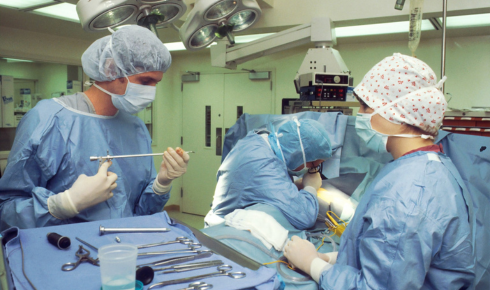
There’s a different feeling around surgery these days. Not a dramatic shift, not something you can point to in a single moment—but a gradual easing of the tension that used to surround it. People still feel nervous, of course. That part hasn’t gone anywhere. But alongside the nerves, there’s something else now—a kind of quiet confidence.
It shows up in conversations. “It wasn’t as bad as I thought,” someone says. Or, “I was home sooner than I expected.” These aren’t miracles. They’re the result of years—decades, really—of steady improvements in how surgery is done and how patients are cared for along the way.
Smaller Steps, Gentler Recovery
If you had to pick one change that’s reshaped the surgical experience, it would probably be this: less disruption to the body.
Modern minimally invasive surgery has taken procedures that once required large incisions and turned them into something far more precise. Instead of opening up the body extensively, surgeons now work through small entry points, guided by cameras and specialized tools.
It’s not just about aesthetics, though smaller scars are a nice bonus. It’s about how the body responds. Less trauma means less pain. Less pain often means quicker recovery. And quicker recovery… well, it changes how people approach surgery altogether.
Patients aren’t necessarily thinking, “This will be easy,” but they’re no longer assuming it will be overwhelming. There’s a middle ground now, and it feels manageable.
When the Stakes Are Higher
Of course, not all surgeries fall into the same category. Some carry a heavier weight, both physically and emotionally.
Take surgical oncology, for instance. When cancer is involved, surgery becomes more than just a procedure—it becomes part of a larger journey. One that includes diagnosis, treatment plans, and often a mix of hope and uncertainty.
What’s changed here isn’t just technique, but approach. Surgeons work closely with oncologists, radiologists, and other specialists to create a plan that’s tailored to the individual. It’s not about rushing into surgery—it’s about understanding timing, options, and long-term outcomes.
And patients are more involved in these decisions than ever before. They ask questions, explore alternatives, and, in many cases, take an active role in shaping their treatment path.
That level of involvement doesn’t remove the difficulty of the situation, but it does offer a sense of control—something that matters deeply when everything else feels uncertain.
Care That Continues Beyond the Operating Room
Surgery doesn’t end when the procedure is over. In many ways, that’s just the beginning.
This is where critical care plays a vital role, especially for patients who require close monitoring after complex or high-risk procedures. These units are designed for constant observation, where every detail is tracked—heart rate, oxygen levels, recovery progress.
It might sound intense, and it is. But it’s also reassuring. Knowing that there’s a team dedicated to watching over every aspect of your recovery brings a certain peace of mind.
What’s interesting is how these environments have evolved. They’re still highly technical, but there’s a growing emphasis on comfort and communication. Families are kept informed. Patients are treated with sensitivity, even in the most serious situations.
It’s a reminder that even in critical moments, care can still feel personal.
The Human Element That Ties It All Together
With all the advancements in tools and techniques, it’s easy to focus on the technical side of surgery. But ask any patient what they remember most, and you’ll hear something different.
They’ll talk about the people.
The surgeon who explained things clearly. The nurse who checked in just to make sure they were okay. The small, human interactions that made a stressful experience feel a little less daunting.
These moments aren’t part of the procedure itself, but they shape how it’s experienced. They build trust, reduce anxiety, and, in some cases, make all the difference.
Because at its core, healthcare isn’t just about fixing problems. It’s about supporting people through them.
Finding Your Own Way Through It
If you’re facing surgery—or even just thinking about it—it’s natural to feel uncertain. There’s a lot to consider, and not all of it is straightforward.
But here’s something worth holding onto: you have a voice in the process. You can ask questions. You can take your time. You can choose a path that feels right for you.
Whether it’s exploring minimally invasive options, understanding the role of oncology in your treatment, or simply finding a team you trust, every step matters.
And the more informed you are, the more confident you’ll feel.
A Subtle but Meaningful Shift
What’s happening in modern surgery isn’t a revolution—it’s an evolution. A series of small, thoughtful improvements that, together, have changed the experience in meaningful ways.
Procedures are more precise. Recovery is more manageable. And the overall approach feels more aligned with what patients actually need.
Surgery will probably always carry a certain seriousness. That’s part of its nature. But it’s no longer defined by fear alone.
There’s room now for reassurance. For clarity. For the kind of confidence that comes not from ignoring the risks, but from understanding them—and knowing you’re in capable hands.