There’s a moment—usually quiet, almost forgettable—when you take a sip of water at home and realize something has changed. It tastes softer, cleaner, less… complicated. No metallic edge, no odd aftertaste. Just water, doing what it’s meant to do. Funny how something so basic can feel like a small luxury once you notice the difference.
Most of us don’t question the water running through our taps. We assume it’s fine because it’s there. But “fine” can be a broad, forgiving word. Over time, though, that vague acceptance starts to crack. Maybe it’s the buildup on your showerhead, or the dry feeling on your skin after bathing, or even the way tea doesn’t quite taste right anymore. Those little clues add up.
Understanding What’s Actually in Your Water
Water quality isn’t a one-size-fits-all situation. What flows through your pipes depends on a mix of factors—local supply sources, old plumbing, seasonal changes, even nearby construction. It’s a moving target, which is why guessing rarely works.
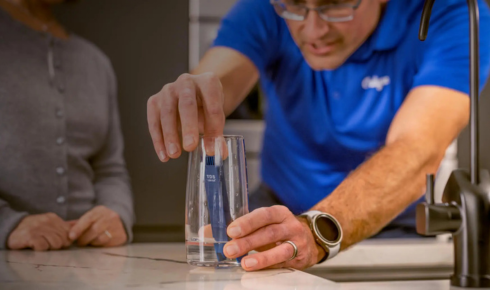
That’s where free in-home water testing becomes surprisingly valuable. Instead of relying on assumptions or generic reports, you get a clear, real-time snapshot of what’s actually coming out of your tap. Hardness levels, chlorine content, sediment—it all gets laid out in a way that makes sense, even if you’re not a technical person.
And honestly, that clarity can be eye-opening. Some people discover their water is harder than expected. Others find trace contaminants that weren’t on their radar at all. It’s not about fear—it’s about awareness. Once you know, you can actually do something about it.
Why Off-the-Shelf Solutions Don’t Always Work
Walk into any home improvement store and you’ll see shelves full of water filters and purifiers. Pitchers, faucet attachments, under-sink systems—it’s all there, promising cleaner water in a neat little package.
But here’s the thing: most of those solutions are designed for general use. They aim to solve broad problems, not specific ones. If your water issue is unique—and it usually is—then a generic filter might only partially fix it, or worse, miss the problem entirely.
That’s why many homeowners eventually lean toward a custom water solution. It sounds fancy, but it’s really just a system tailored to your home’s specific conditions. Maybe you need a softener to handle mineral buildup. Maybe a reverse osmosis system for drinking water. Or maybe something more layered.
The point is, when the solution matches the problem, everything works better. Appliances last longer. Laundry feels cleaner. Even your morning coffee improves—small wins, but they add up quickly.
The Subtle Ways Water Quality Affects Daily Life
We often think of water quality in terms of drinking, but its impact stretches much further. Skin health, for instance, can quietly suffer when water is too hard or chemically imbalanced. Dryness, irritation, even dull hair—it’s all connected.
Then there’s the home itself. Hard water leaves behind scale that clogs pipes and reduces efficiency in appliances like dishwashers and water heaters. Over time, that translates into higher energy bills and more frequent repairs.
It’s not dramatic or immediate. It’s slow, almost sneaky. But once you improve your water, you start noticing what’s been missing all along. Showers feel different. Clothes last longer. Even cleaning becomes less of a chore because soap actually lathers the way it should.
Choosing What Fits Your Home, Not Someone Else’s
Every home has its own story when it comes to water. A family in a rural area dealing with well water faces different challenges than someone in a city apartment. Even neighboring houses can have slightly different conditions.
That’s why understanding your specific water quality needs matters so much. It’s not about chasing the most advanced system or the most expensive option. It’s about finding what fits your situation—practically and realistically.
Some people start small, maybe with a drinking water filter. Others go all in with whole-house systems. There’s no right or wrong approach, just what feels right for your home and your budget.
And it’s okay to take your time figuring that out. Water isn’t going anywhere, but improving it can be a gradual, thoughtful process.
A Small Change That Feels Bigger Than Expected
There’s something oddly satisfying about solving a problem you didn’t fully realize you had. Clean, balanced water does that. It doesn’t shout for attention, but it quietly improves so many parts of daily life.
You might not wake up one morning thinking, “Today is the day I fix my water.” But once you start paying attention, it becomes hard to ignore. And once you make the change, it’s even harder to go back.
In the end, it’s not just about water. It’s about comfort, health, and the small details that make a house feel like home. Sometimes, the simplest upgrades turn out to be the most meaningful ones—even if they begin with something as ordinary as the water flowing from your tap.