
Water has a funny way of becoming important only when something goes wrong. A glass tastes different than usual. A coffee maker starts collecting scale. A business notices mineral buildup on equipment. Suddenly, the water that was always taken for granted becomes a problem worth investigating.
Fortunately, modern water treatment offers several practical ways to improve water quality. The right solution depends on the source of the water, the contaminants involved, the size of the property, and what the water is being used for. There isn’t one magic system that works perfectly everywhere. And that’s actually a good thing.
Start With Water Testing
Before choosing equipment, it makes sense to understand what’s actually in the water. Water testing can provide information about hardness, pH, dissolved minerals, sediment, iron, chlorine, and other characteristics depending on the type of test being performed.
This is especially useful when the problem isn’t obvious. Water may look perfectly clear while still having qualities that affect taste, plumbing, or appliances.
Testing also prevents a common mistake: buying a treatment system simply because someone else recommended it. A system that works beautifully for your neighbor may be completely unnecessary for your home.
Think of testing as the starting point rather than an extra step.
How Reverse Osmosis Works
One of the better-known technologies for drinking-water treatment is reverse osmosis (RO) systems. These systems use pressure to push water through a semipermeable membrane, reducing many dissolved substances and impurities.
RO is often used for drinking and cooking water because it can provide a highly treated stream of water at a specific point of use. Some homeowners install systems beneath the kitchen sink, while other setups may be designed for broader applications.
However, reverse osmosis isn’t automatically the right answer for every household. It requires appropriate maintenance, including filter and membrane replacement. It may also produce some wastewater depending on the system design.
The takeaway is simple: RO can be very effective, but it should be selected for a reason.
What About Hard Water?
Hard water is a separate issue that many households encounter. Calcium and magnesium can create scale on faucets, showerheads, plumbing components, and water-using appliances.
If hardness is the main concern, a water softener may be more appropriate than an RO system for the entire house. Some homes use both technologies for different purposes—a softener for household water and RO for drinking water.
That kind of combination can make sense because each system has a specific job.
Commercial Water Needs Are Different
A small home and a large manufacturing facility obviously don’t use water in the same way. Businesses may need water for production, cleaning, cooling, food preparation, equipment operation, or other specialized processes.
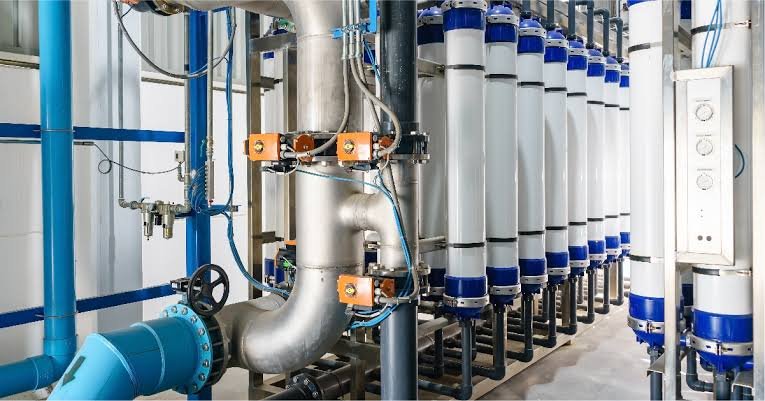
This is where commercial and industrial water treatment becomes particularly important. Treatment systems for larger facilities may need to handle much greater flow rates and address specific water-quality requirements.
For example, a restaurant might care deeply about taste, hardness, and equipment scale. A manufacturing facility could have much more specialized requirements involving process water. A hotel may need consistent water quality across hundreds of rooms.
There isn’t much room for guesswork in these environments. A treatment system has to match the operation.
Why System Sizing Matters
Choosing a treatment system based only on price can backfire. A system that’s too small may struggle to keep up with demand, while an oversized setup can add unnecessary costs.
Sizing should take into account water usage, peak demand, incoming water quality, available installation space, and the type of treatment required.
For commercial properties, the calculation can become even more important. Water demand can change throughout the day, and certain equipment may require large amounts of water at specific times.
Professional evaluation can help prevent these problems before installation.
Maintenance Is Part of Water Treatment
Installing a system is only part of the process. Filters become saturated. RO membranes eventually need replacement. Valves, pumps, tanks, and other components can wear over time.
Ignoring maintenance is one of the easiest ways to reduce system performance.
Keep track of filter changes and follow manufacturer recommendations. If water taste, pressure, appearance, or odor changes unexpectedly, don’t automatically assume the problem will disappear.
Sometimes the fix is simple. Other times, the system needs professional attention. Either way, finding the issue early is usually better than waiting for a complete failure.
Protecting Equipment and Plumbing
Water treatment can also be about protecting the things that use water.
Hardness and scale can affect water heaters, dishwashers, coffee equipment, washing machines, and commercial appliances. Sediment can create its own set of problems, particularly when it reaches valves or sensitive equipment.
Treating the water appropriately can help reduce these issues and keep equipment operating more consistently.
Of course, treatment isn’t a substitute for regular maintenance. A water heater still needs attention, appliances still need cleaning, and filters still need replacement. Think of water treatment as one part of a larger maintenance strategy.
Choosing Technology Without Getting Overwhelmed
There are plenty of treatment technologies on the market. That can make the decision feel harder than it needs to be.
Start with the basics. What is wrong with the water? How much water is being used? Which contaminants or characteristics actually matter? How much maintenance are you comfortable with?
Once those questions are answered, the list of suitable options usually becomes much shorter.
A reputable water treatment professional should also be willing to explain why a system is being recommended. You should understand what it treats, what it doesn’t treat, how often it needs service, and what ongoing costs to expect.
If someone says you absolutely need the biggest system available without first testing or evaluating your water, it’s reasonable to ask a few more questions.
Better Water Comes From Better Information
Water treatment technology has come a long way, but technology alone doesn’t solve the problem. The best results come from matching the right technology to the right water and the right application.
For homeowners, that might mean combining softening with drinking-water filtration. For businesses, it may require a carefully designed treatment system built around daily operations.
Whatever the situation, begin with testing, understand the results, and consider the long-term picture—not just the initial purchase price.
When the water tastes better, equipment runs smoothly, and the system quietly does its job in the background, you know you’ve made a sensible choice. That’s really what good water treatment should deliver: fewer surprises, better performance, and water you can feel comfortable relying on every day.


